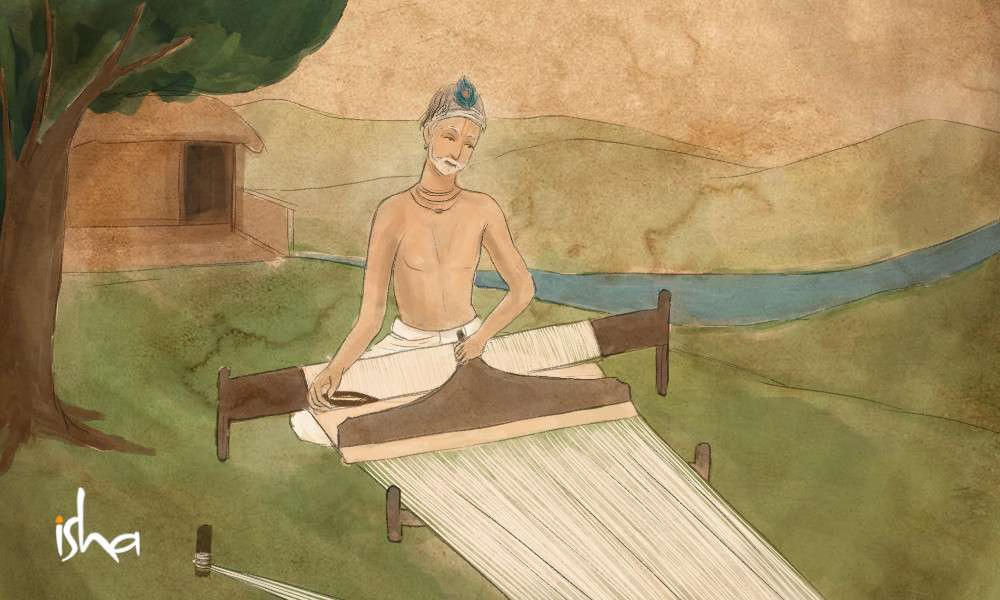
The Divine Mind: Unity in All Things
In the profound words of Kabir, "He is the immanent mind in Brahma and in the creature," we encounter a striking assertion about the nature of divinity and its relationship to the universe and individual beings. This statement invites us to consider the omnipresence of the divine mind, suggesting that the essence of the Creator is not separate from creation but rather interwoven within it. The stakes of this understanding are high; recognizing this immanence can transform our perception of ourselves and the world around us, fostering a sense of unity and interconnectedness that transcends the illusion of separateness.
As we delve deeper into this quote, we find ourselves grappling with the implications of immanence. Kabir's assertion challenges us to rethink our understanding of divinity as something distant and removed. Instead, it presents a vision of a living, breathing presence that permeates all existence. This perspective not only elevates our understanding of the divine but also compels us to acknowledge the sacredness inherent in every creature and aspect of life. It is a call to awaken to the divine reality that exists within and around us, urging us to cultivate a deeper awareness of our connection to the cosmos.
The image / the metaphor
The imagery in Kabir's quote is rich and evocative, inviting us to visualize the divine mind as an all-encompassing presence. The term "immanent" suggests a closeness, an intimate involvement of the divine in the fabric of reality. By placing the divine mind within both Brahma, the cosmic creator, and the individual creature, Kabir emphasizes a duality that is, in essence, a unity. This duality reflects the complexity of existence, where the infinite and the finite coexist, each reflecting the other in a dance of creation and consciousness.
Diving deeper into the metaphor, we can see that the "immanent mind" serves as a bridge between the transcendent and the mundane. It suggests that the divine is not merely a distant observer but an active participant in the unfolding of life. This understanding invites us to recognize that our thoughts, feelings, and actions are imbued with divine significance. The mind, as a vessel of consciousness, becomes a sacred space where the divine and the human intersect, urging us to explore the depths of our own awareness and the profound interconnectedness of all beings.
In the speaker's tradition
Kabir's teachings are deeply rooted in the bhakti tradition, which emphasizes devotion and the personal experience of the divine. This tradition often speaks of concepts such as dharma, the moral order of the universe, and bhakti itself, the loving devotion to God that transcends ritualistic practices. In this context, the idea of immanence aligns with the concept of kenosis, or self-emptying, where the divine essence is believed to flow into the world, inviting us to participate in this divine play. The notion of sunyata, or emptiness, further complements this understanding, suggesting that true realization comes from recognizing the interconnectedness of all things.
To illustrate this, we can turn to the writings of the Upanishads, which echo similar sentiments about the relationship between the individual soul (Atman) and the universal spirit (Brahman). In the Chandogya Upanishad, it is stated, "Tat Tvam Asi," meaning "That Thou Art," which encapsulates the essence of unity between the individual and the divine. Kabir's assertion resonates with this ancient wisdom, reinforcing the idea that the divine mind is not only present in the cosmos but also intimately woven into the fabric of our own consciousness.
Living the teaching
In our modern lives, the teaching of Kabir can manifest in various ways, particularly in moments of connection with others. Consider a scenario where we find ourselves in a heated discussion with a friend or colleague. If we approach this interaction with the awareness that the divine mind resides within both ourselves and the other person, we may find it easier to cultivate empathy and understanding. This recognition can transform conflict into an opportunity for deeper connection, allowing us to see beyond our differences and appreciate the shared essence that binds us together.
Another application of this teaching can be found in our daily practices, such as meditation or mindfulness. When we sit in stillness, we can reflect on the idea that the divine mind is present within us, guiding our thoughts and actions. This practice encourages us to cultivate a sense of inner peace and clarity, reminding us that we are not separate from the world around us. By embracing this immanence, we can navigate life's challenges with greater grace and compassion, recognizing that each moment is infused with the sacred.
A reflection
As we contemplate Kabir's profound words, we are invited to reflect on our own understanding of the divine. How do we perceive the relationship between ourselves and the greater cosmos? In what ways can we cultivate a deeper awareness of the immanent mind within ourselves and others? This contemplation can serve as a guiding question, encouraging us to explore the depths of our connection to the divine and the world around us, ultimately leading us toward a more unified and compassionate existence.




Join the BrightStar Community
Stay connected with daily inspiration, event announcements, and community wisdom