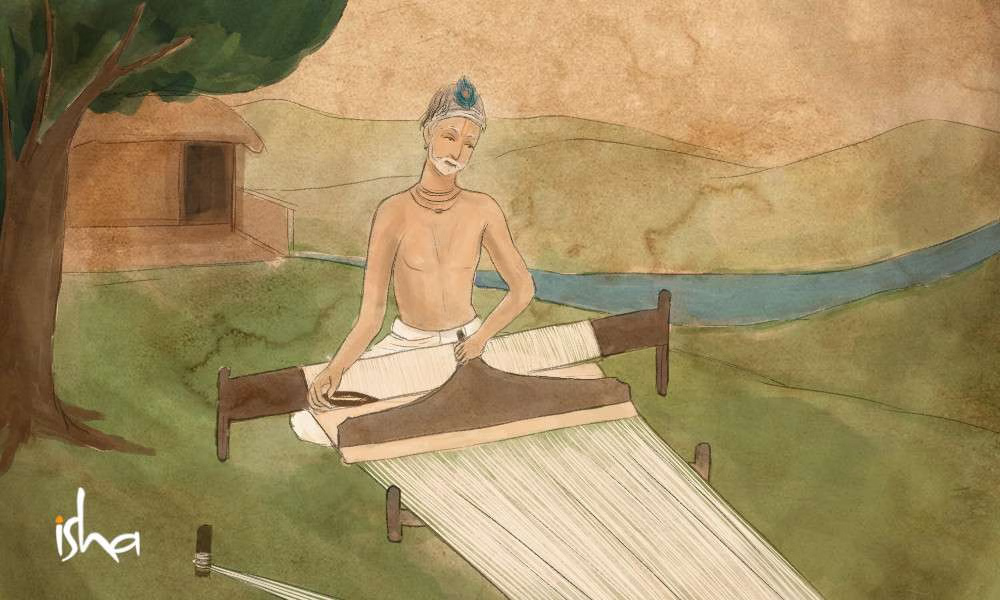
Unraveling the Illusion of Attachment
In the poignant words of Kabir, "Tell me, brother, how can I renounce Maya? When I gave up the tying of ribbons, still I tied my garment about me." This quote encapsulates the struggle of human existence, where the quest for spiritual liberation often collides with the persistent attachments of the material world. Kabir's inquiry invites us to reflect on the nature of illusion—Maya—and the complexities of surrendering to a higher truth while still being ensnared by the very fabric of our daily lives. The stakes are high, as this contemplation leads us to confront the paradox of seeking freedom while being bound by our own desires and identities.
At its core, Kabir's statement reveals a profound understanding of the human condition. It speaks to the inherent difficulty of relinquishing attachments, even when we consciously strive to do so. The act of tying ribbons, a seemingly mundane task, serves as a metaphor for the myriad ways we bind ourselves to the world around us. Kabir's words resonate deeply with those on a spiritual path, urging us to examine the layers of illusion that obscure our true nature. This exploration is not merely an intellectual exercise; it is a call to engage with the very essence of our being and the attachments that shape our experience.
The image / the metaphor
The imagery in Kabir's quote is rich and evocative, conjuring a sense of struggle and contradiction. The act of tying ribbons symbolizes the small, often overlooked ways we become entangled in the fabric of life. It suggests a delicate dance between intention and action, where even the most seemingly innocuous tasks can reveal deeper truths about our attachments. The garment, a representation of our identity and the roles we play, serves as a reminder that even in our attempts to renounce the superficial, we may still find ourselves clinging to the very things we wish to let go of.
Diving deeper into the metaphor, we can see that the act of tying one's garment is not just about physical attire but speaks to the broader human experience of identity and attachment. It highlights the irony of our spiritual pursuits; we may seek to transcend our limitations, yet we often find ourselves caught in the web of our own making. This tension between aspiration and reality is a central theme in Kabir's work, urging us to recognize that the path to liberation is fraught with challenges that require both awareness and compassion.
In the speaker's tradition
Kabir's insights are deeply rooted in the bhakti tradition, which emphasizes devotion and the personal relationship with the divine. In this context, the concept of Maya represents the illusion that distracts us from our true nature and the divine presence within. The bhakti path encourages surrender, or bhakti, as a means to transcend these illusions and connect with the ultimate reality. This surrender is not a passive resignation but an active engagement with the divine, where one learns to navigate the complexities of existence while remaining anchored in love and devotion.
To further illuminate this teaching, we can draw parallels with the Buddhist concept of sunyata, or emptiness, which invites practitioners to recognize the transient nature of all phenomena. Just as Kabir challenges us to see through the illusions of attachment, the notion of sunyata encourages a deep understanding of the impermanence of our experiences. Both traditions point to the necessity of recognizing the illusory nature of our attachments in order to cultivate a deeper sense of freedom and connection to the divine.
Living the teaching
Consider a modern scenario where this teaching resonates: a person striving for success in their career may find themselves overwhelmed by the pressures of societal expectations. Despite their desire to remain unattached to the outcome, they may still feel the weight of ambition pulling them back into the cycle of desire and dissatisfaction. In this context, Kabir's words serve as a reminder to examine the motivations behind their actions and to recognize the subtle ways in which they are still tied to the ribbons of ambition, even as they seek to renounce them.
In a different application, think about a relationship where one partner struggles with feelings of jealousy or insecurity. Despite their intention to cultivate trust and openness, they may find themselves clinging to past hurts or fears, thus tying their emotional garment tightly around them. Kabir's teaching invites both partners to explore the nature of their attachments and to engage in a process of surrender, allowing for vulnerability and authenticity to emerge. This practice of awareness can lead to deeper connections and a greater understanding of the self and the other.
A reflection
As we contemplate Kabir's profound inquiry, we are invited to reflect on our own lives: What are the ribbons we tie around ourselves, and how do they shape our experience of reality? In what ways do we cling to illusions, even as we seek to renounce them? This contemplation encourages us to engage with our attachments with honesty and compassion, fostering a deeper understanding of the interplay between our desires and our spiritual aspirations.



Join the BrightStar Community
Stay connected with daily inspiration, event announcements, and community wisdom