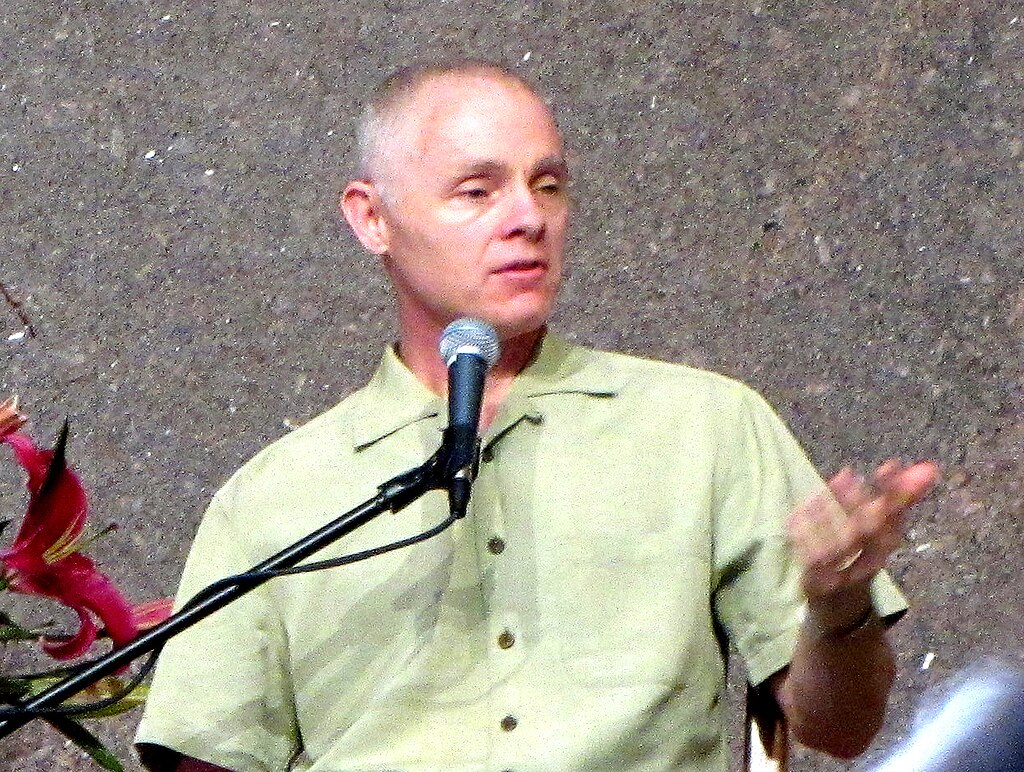
Unveiling the Essence of Truth
Adyashanti's assertion that "The truth doesn't need protecting. It needs revealing" invites us to reconsider our relationship with truth itself. In a world often shrouded in illusion and misunderstanding, this statement serves as a clarion call to embrace authenticity and vulnerability. The stakes are high; our ability to connect deeply with ourselves and others hinges on our willingness to unveil the truths that lie beneath the surface of our conditioned perceptions.
This quote resonates deeply within the context of spiritual awakening, where the journey often involves peeling back layers of self-deception and societal conditioning. The act of revealing truth is not merely an intellectual exercise; it is a profound act of courage that requires us to confront our fears and insecurities. In this light, Adyashanti's words challenge us to shift from a defensive posture—where we feel the need to protect our beliefs and identities—to one of openness, where we allow the light of truth to illuminate our path.
The image / the metaphor
At its core, the quote employs a striking metaphor that contrasts the notions of protection and revelation. The imagery of "protecting" suggests a defensive stance, one that implies fear and a desire to shield oneself from perceived threats. In contrast, "revealing" evokes a sense of openness and vulnerability, inviting us to expose what is often hidden. This juxtaposition highlights the tension between our instinctual need for safety and the liberating power of truth.
In the speaker's tradition
Adyashanti's teachings are rooted in the non-dual tradition, which emphasizes the interconnectedness of all existence and the illusory nature of separation. Concepts such as *sunyata* (emptiness) and *fana* (annihilation of the self) resonate with the idea that truth is not something to be grasped or held onto, but rather something to be experienced and realized. In this context, the act of revealing truth aligns with the practice of *kenosis*, or self-emptying, where one relinquishes the ego's need for control and certainty.
In the realm of non-duality, the notion of truth transcends mere factual accuracy; it embodies a deeper understanding of reality as it is. The *Dharma* teachings often emphasize the importance of direct experience over conceptual knowledge. In this light, Adyashanti's call to reveal truth can be seen as an invitation to engage with our lived experience, to uncover the layers of conditioning that obscure our innate wisdom. This aligns with the teachings found in texts such as the *Heart Sutra*, which articulates the profound realization that form and emptiness are not separate but interwoven aspects of the same reality.
Living the teaching
Consider a modern scenario where this teaching might resonate: a workplace environment fraught with competition and secrecy. In such a setting, individuals often feel compelled to protect their ideas and achievements, fearing that vulnerability might lead to exploitation or judgment. However, when one chooses to reveal their authentic thoughts and feelings, a transformative shift can occur. This openness fosters collaboration and trust, allowing for a more harmonious and productive atmosphere where creativity can flourish.
Another application of this teaching can be found in personal relationships. Imagine a moment of conflict where one partner feels the urge to protect their feelings, fearing that revealing their true emotions might lead to rejection or misunderstanding. By choosing to reveal their vulnerabilities instead, they create an opportunity for deeper connection and intimacy. This act of revealing not only strengthens the bond between partners but also cultivates an environment where both individuals feel safe to express their authentic selves, ultimately enriching the relationship.
A reflection
As we contemplate Adyashanti's profound insight, we are invited to reflect on our own lives: What truths are we holding back, and what fears are preventing us from revealing them? In a world that often encourages us to wear masks and build walls, how might we practice the art of unveiling our authentic selves? This contemplation can serve as a guiding light, encouraging us to embrace vulnerability as a pathway to deeper connection and understanding.


