Beyond the Walls of Thought: A Journey into Consciousness
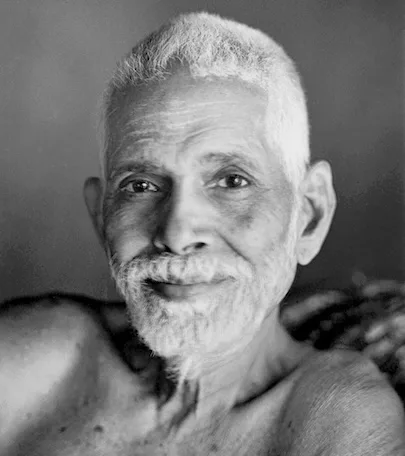
Ramana Maharshi's profound statement, "The mind creates a wall of thoughts. Go beyond it," invites us to explore the intricate relationship between our thoughts and our true nature. This quote serves as a gentle yet firm reminder that our mental constructs can often confine us, obscuring the deeper essence of who we are. In a world where we are inundated with distractions and incessant mental chatter, understanding this teaching becomes essential for cultivating inner peace and clarity.
To go beyond the wall of thoughts is not merely an intellectual exercise; it is a call to engage in a transformative practice that leads to self-realization. Maharshi's words resonate deeply within the framework of Vedanta, where the ultimate goal is to transcend the limitations of the mind and experience the unconditioned state of consciousness. This journey is not just about silencing the mind but about recognizing the deeper layers of existence that lie beyond our habitual thinking patterns.
The image / the metaphor
The imagery of a "wall of thoughts" evokes a powerful sense of confinement. Walls are structures that separate and isolate; they create boundaries that can feel impenetrable. In this metaphor, thoughts are not merely fleeting ideas but solid barriers that obscure our perception of reality. The verb "creates" suggests an active role of the mind in constructing these walls, highlighting the idea that our mental processes can either liberate or imprison us, depending on how we engage with them.
In the speaker's tradition
Ramana Maharshi's teachings are deeply rooted in the Vedantic tradition, which emphasizes the realization of the Self (Atman) as the ultimate truth. Concepts such as dharma, the moral order of the universe, and prajna, or wisdom, play significant roles in this journey. The act of going beyond the mind's walls aligns with the Vedantic pursuit of self-inquiry, where one questions the nature of the self and the reality of thoughts. This process is akin to the practice of kenosis, or self-emptying, which invites us to relinquish our attachments to the ego and its constructs.
In the context of Vedanta, the notion of sunyata, or emptiness, further enriches our understanding of Maharshi's quote. Just as sunyata encourages us to recognize the transient nature of thoughts and phenomena, Maharshi's teaching invites us to see beyond the illusions created by the mind. In the Upanishads, we find echoes of this wisdom, particularly in the phrase "Tat Tvam Asi," meaning "That Thou Art," which points to the interconnectedness of all existence and the realization that our true nature transcends the confines of thought.
Living the teaching
Consider a modern scenario where the walls of thought manifest in the form of anxiety about the future. Imagine a person overwhelmed by the incessant worry of what lies ahead, trapped in a cycle of negative thinking that clouds their ability to enjoy the present moment. In this situation, Maharshi's teaching serves as a guiding light, encouraging the individual to pause, breathe, and recognize that these thoughts are not the entirety of their being. By practicing mindfulness and meditation, they can begin to dismantle the wall of anxiety, allowing for a more peaceful and grounded experience of life.
Another application of this teaching can be found in interpersonal relationships. Often, we build walls of assumptions and judgments that hinder authentic connection with others. When we approach a conversation with preconceived notions, we create barriers that prevent genuine understanding. By embodying Maharshi's wisdom, we can learn to listen deeply and engage with others without the interference of our mental constructs. This practice fosters compassion and empathy, allowing relationships to flourish in a space free from the confines of the mind.
A reflection
As we contemplate Ramana Maharshi's profound insight, we are invited to reflect on the nature of our own thoughts and the walls we may have constructed. What barriers are we holding onto that prevent us from experiencing the fullness of life? In this moment of introspection, consider the question: How might I begin to dismantle the walls of thought that confine my perception of self and others, allowing for a deeper connection to the present moment and to my true essence?


